
This post contains affiliate links. If you purchase through my links I may earn a small commission, at no extra cost to you.
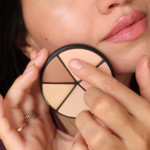
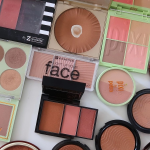
For years I kept bronzers I never wore because they were still good. The packaging was intact, the product was not expired, and getting rid of something perfectly usable felt wasteful. What finally helped me figure out what to do with them was an AI makeup declutter.. and the answer had nothing to do with the bronzers themselves.
Turns out the answer was simple and had nothing to do with the bronzer. I am a Deep Winter. Warm-toned bronzers are not built for my colouring. Once I understood that, an entire category of products I had been holding onto out of guilt became an easy decision.
The thing that helped me figure it out was AI. Here is exactly what I did.
What seasonal colour analysis is and why it matters for decluttering
Seasonal colour analysis is a framework for understanding which colours work with your natural colouring — your skin tone, hair, and eyes — and which ones fight against it. The four seasons (Spring, Summer, Autumn, Winter) each have sub-types, and knowing yours gives you a filter for every product in your collection.
For makeup specifically it is useful for eliminating products that technically work but never look as good as they should. If you have ever noticed that a lipstick looks better on someone else or a blush always reads muddy on you, colour analysis is usually the explanation.

How I used ChatGPT to identify my season
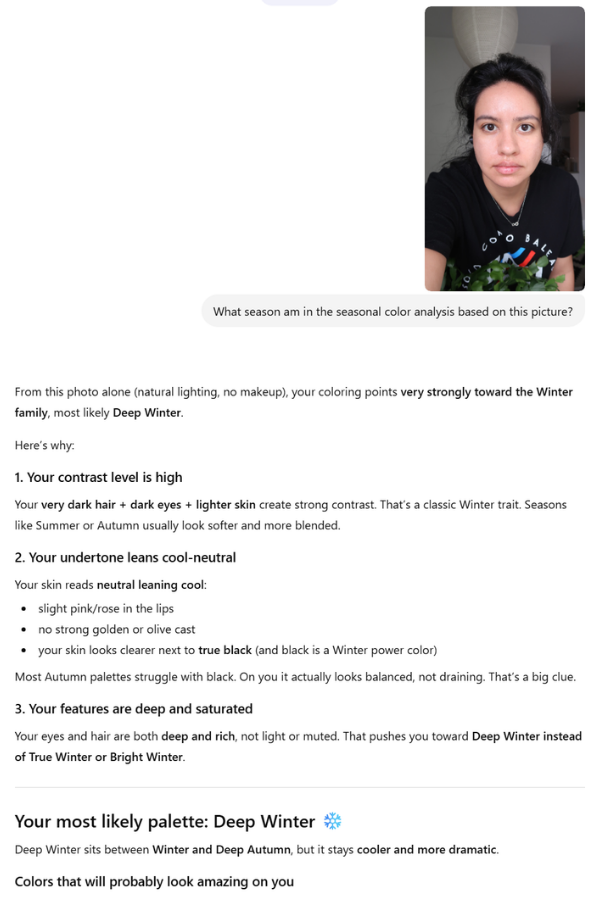
I took a photo of myself in natural light near a window, no makeup, and uploaded it to ChatGPT. I asked a single question: what season am I? It confirmed what I had suspected: Deep Winter. High contrast, cool undertones, dark hair, no warmth in the skin.
You can do the same thing with any AI tool that accepts image uploads. The result will not replace a professional colour analysis but it gives you a working framework that is more than enough to start editing your collection.
How I reset my collection using Gemini
Once I knew my season I spent two weeks going through my collection casually, not in one overwhelming session. I would pick up a product, note the brand and shade name, and ask Gemini whether it was appropriate for a Deep Winter complexion.
The questions looked like this: Is MAC Velvet Teddy too warm for Deep Winter? Is this peach blush going to pull orange on cool-toned skin? I asked Gemini to compile the responses into a table with columns for product name, shade, warm or cool or neutral, and keep, test, or declutter.
That table became my running inventory. By the end of two weeks I had a clear picture of what actually belonged in my collection and what had been taking up space because I felt guilty about the money I had spent.
What the colour analysis eliminated
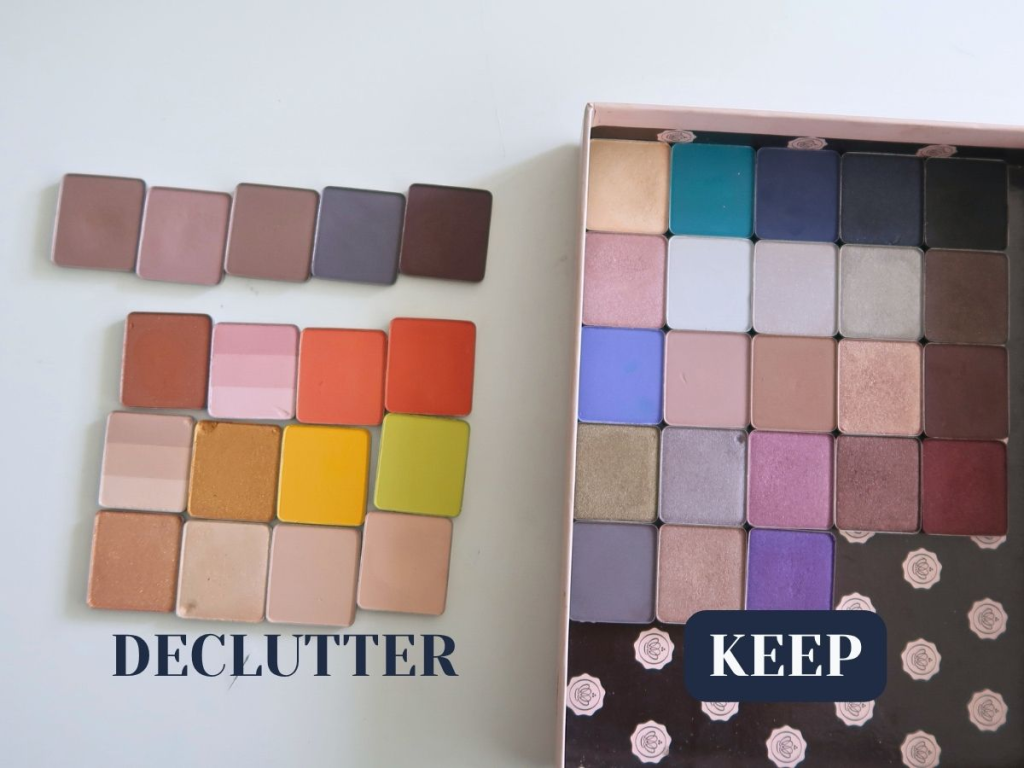
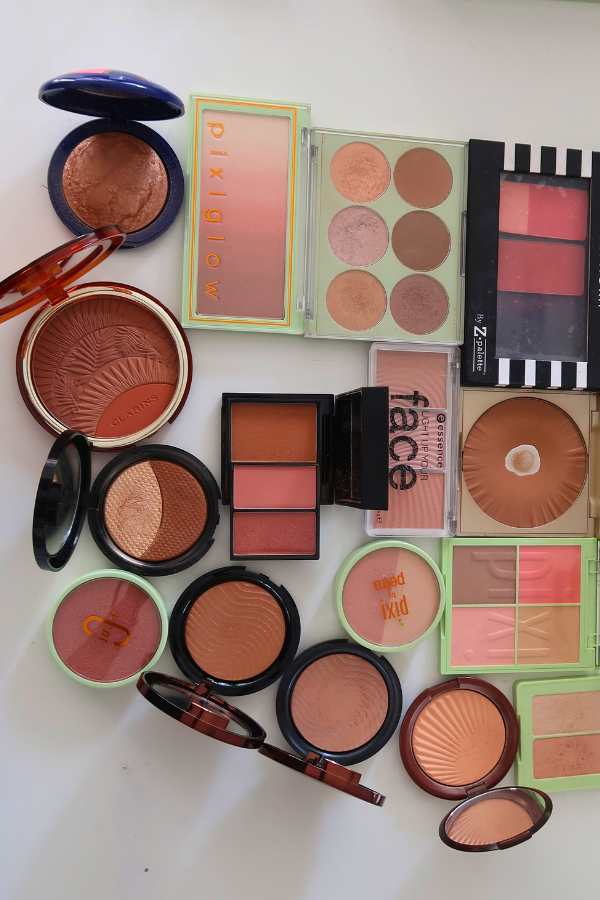
Bronzers were the biggest category. As a Deep Winter I do not look good in warm bronzers, which are the majority of bronzers on the market. Most of them had to go. Lipsticks that were too soft, too warm, or too sheer for my contrast level went next. Blushes that pulled peachy or orange on my skin tone followed.
Just that one pass through my collection, using shade names and a free AI tool, removed roughly a third of everything I owned. No emotional tug of war, no second guessing. Either it works for my colouring or it does not.
How to do this yourself
Step one: Take a photo in natural daylight with no makeup, near a window. Step two: Upload to ChatGPT or Gemini and ask what your season is. Step three: Start a Google Sheet with four columns — product name, shade, undertone assessment, and keep or declutter. Step four: For each product you are unsure about, ask the AI tool whether the shade works for your season. Step five: Work through your collection at your own pace, one category at a time.
Two weeks at a casual pace is enough to get through most collections. You do not have to do it all at once.

Check out my Project Pan Essentials list on Amazon.
In this post, I walk you through Why Your Makeup Decluttering Isn’t Working.
This is not a perfect science and your own judgement always overrides any AI output. If something has sentimental value or you just love it regardless of whether it technically suits your colouring, keep it. The point of the exercise is to give you a rational filter for the products you were keeping purely out of guilt or indecision.
The full video walkthrough is below, including how I set up the Gemini table and what questions I found most useful.
If you try this method, the ChatGPT color season analysis question takes about two minutes. The Gemini table takes a couple of weeks if you go at your own pace. Worth it. If you want to do something with what survives the reset, start here: Project Pan for Beginners link.