
This post contains affiliate links. If you purchase through my links I may earn a small commission, at no extra cost to you.
If you have been trying to figure out how to stop buying makeup, willpower is probably not your problem.
I was a beauty blogger for over ten years and I received a lot of PR. I also bought a lot of makeup. Then my mom passed away and I inherited her collection on top of my own. At some point I had to get honest about the fact that I would never in my lifetime use everything I owned, and that a lot of what I kept buying I did not actually need.
Stopping did not happen because I told myself to stop. It happened because I understood why I was buying in the first place. Here is what I learned.
Why willpower alone does not work
Shopping triggers dopamine, the same hormone involved in motivation, pleasure, and habit formation. The thrill of a new product, the anticipation of a haul, the satisfaction of adding something to a cart — these are real neurological rewards. You are not weak for finding it difficult to resist. You are responding to a system that is specifically designed to create that response.
The problem is that the reward is short-term and the consequence is long-term. The products accumulate. The money is gone. The drawer overflows. You feel guilty, do a big declutter, and the cycle starts again because the underlying habit was never addressed.
The collection mindset vs the usage mindset
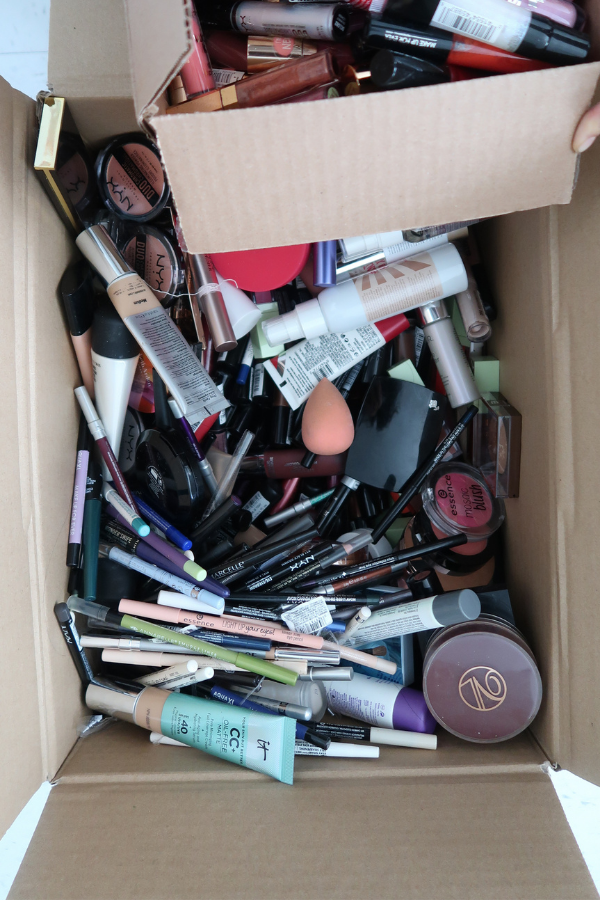
There is a difference between owning makeup and using makeup. Collecting implies keeping things to look at, to have options, to rotate through variety. Using means you are going through products with the intention of finishing or at least genuinely evaluating them.
Most of us who have large collections have crossed the line from using to collecting without realising it. The blushes you bought in the 2010s that you rotate through but never finish, the foundations you keep in case you need them, the lipsticks you loved the packaging on but never reach for — these are a collection, not a working kit.
The question worth asking is: how many products in each category have you actually finished to completion? The answer is usually very low relative to what you own.
The wishlist method that actually works
Every time you want to buy something, add it to a wishlist spreadsheet instead of your cart. Three columns: product name, price, why you want it. Then close the tab and forget about it.
At the end of the month, look at the list. Most items will no longer feel urgent. Some you will have stopped thinking about entirely. A few will still feel genuinely necessary. Those are the only ones worth considering further.
This works because it separates the impulse from the purchase. By the time you revisit the list, you are evaluating from a grounded state rather than a dopamine-triggered one. It also exposes how fast the market moves — by the time you are ready to buy something there is usually already a newer version you would want instead.
The 24 to 48 hour rule
Before filling a Sephora cart or placing an online order, wait 24 to 48 hours. This is not a new idea but it works. The question to ask yourself in that window is: am I replacing something I have actually used up, or am I just adding to a collection I already cannot get through?
If you are replacing something depleted, the purchase is rational. If you are adding to a category where you already have multiple products, it is worth pausing.
Replace the dopamine, not the product
The craving does not disappear when you stop buying. It needs to go somewhere. What works is redirecting it toward using what you already own rather than acquiring something new.
Set usage goals instead of purchase goals. Try three different looks from the same eyeshadow palette. Commit to finishing one product in a category before assessing whether you need a replacement. Start tracking your empties so you can see the physical proof of your own consumption patterns. These activities hit the same reward system as buying without the accumulation.
Learn how to start a Project Pan for Beginners.
Check out my Project Pan Essentials.
The maybe box for guilt-free decluttering
When you are not sure whether to keep something, put it in a maybe box or a maybe drawer instead of forcing a decision. Revisit it in a month. If you have not reached for it in that time, the decision usually makes itself. If you try it again and it still does not feel right, let it go without guilt.
This works better than the aggressive full-purge approach because it removes the emotional pressure of deciding everything at once. You can also keep a habit of grazing — decluttering as you go, in small moments, rather than waiting for a session you have to psyche yourself up for.
What finally killed the craving for me
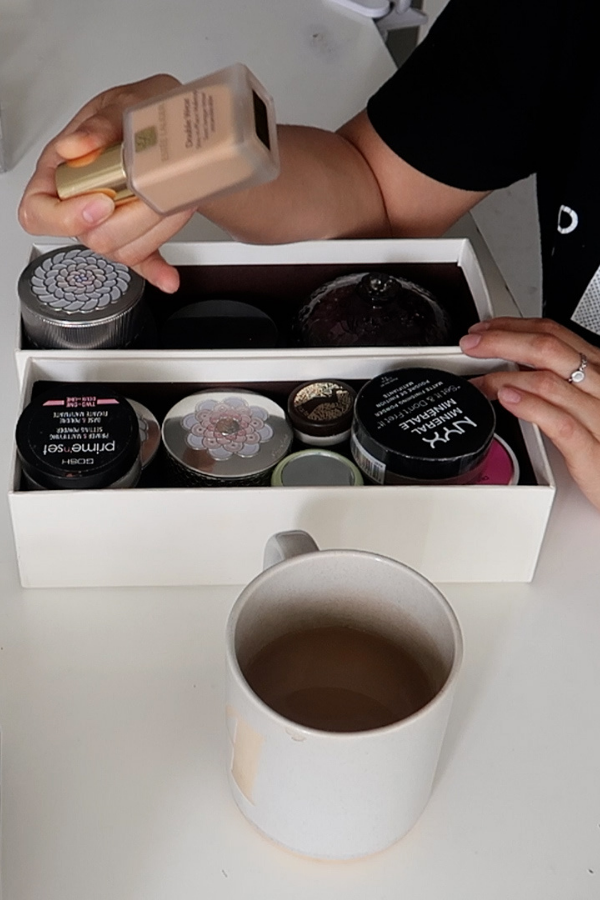
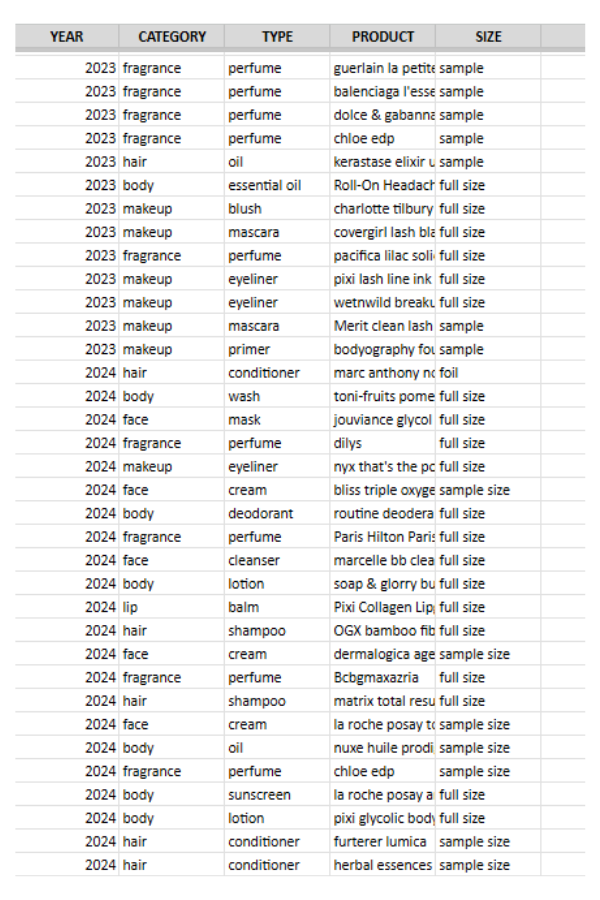
Tracking my empties from 2020 to mid-2024 showed me exactly what I actually go through in a year. Once I understood my own usage patterns, the gap between what I owned and what I could realistically use became impossible to ignore. I also realised how much time I had spent researching, comparing, and window shopping for things I did not end up needing.
I still have more makeup than most people. I am not going to pretend otherwise. But I am not buying more, and the craving has genuinely reduced because I know the math. These lips are not going to get through all of it, and most of it will end up in landfill whether I finish it or not. That reality, held honestly, is more effective than any willpower exercise I have tried.
Why Your Makeup Decluttering Isn’t Working
I Used AI to Declutter My Makeup Collection
If you have been in the buy, accumulate, declutter, repeat cycle for a while, you are not going to think your way out of it. You need systems that make the alternative easier than the habit. The wishlist, the usage tracking, the rotation routine, the maybe box — none of these require discipline. They just require a different structure.
Watch the full video below for everything covered in this post and more, including the colour analysis method and the stash organisation system I actually use.
If you need help getting started, download out my free Beauty Audit.